
Elie Wiesel: Reading from His Works

Click below to hear Elie Wiesel read directly from his powerful memoir, Night.

TIMELINE GOES HERE

I was going to have to open the gates of memory, to break the silence while safeguarding it.

Opening the Gates of Memory - All Rivers Run to the Sea

Writings/Speeches by EW about Night

All Rivers Run to the Sea, pp. 239-240

“An Interview Unlike Any Other,” pp. 17-23

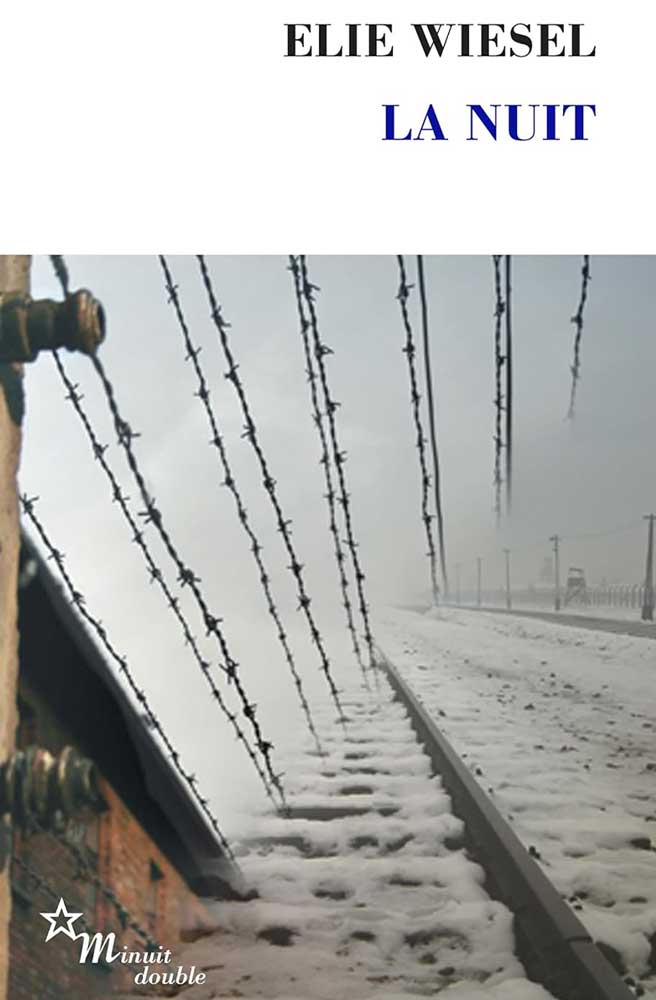
A Short History of the Publication of La Nuit

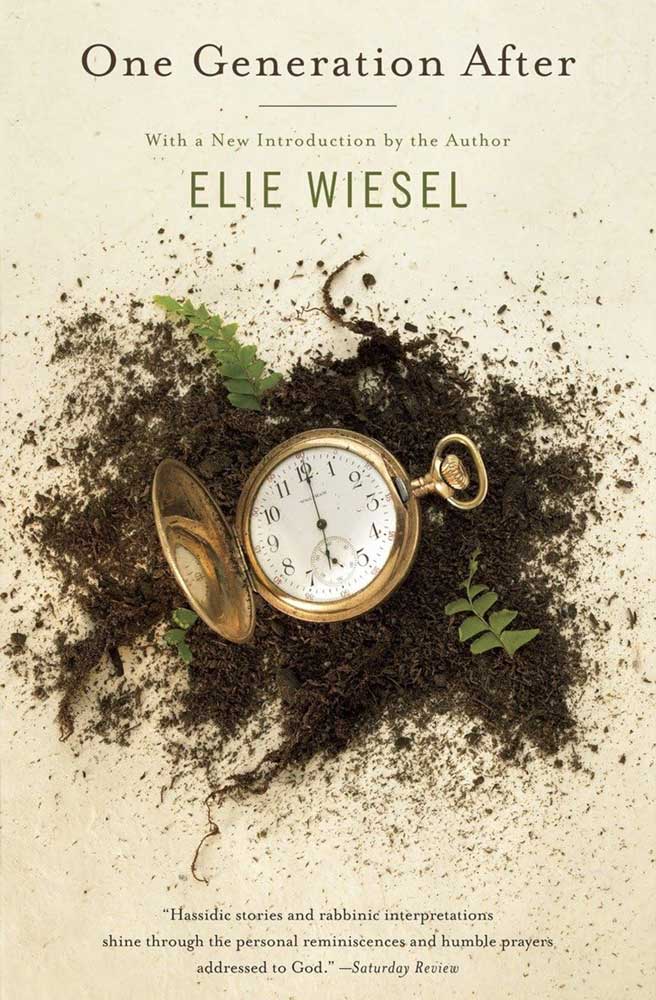
DIALOGUES I/One Generation After (1970)

We May Use Words to Break the Prison: Elie Wiesel on Writing Night, Facing History, 1991

Resources for Studying

The 92NY Wiesel Living Archive as a Companion to Night

Extraordinary book that Night is, it does not contain all of what Elie Wiesel experienced during the war. Nor does it contain all of what he has recounted about that experience. The 92NY lectures expand what we can know about Professor Wiesel’s wartime ordeal—and they do that by means of his personal recollections.

Drawing on the Yiddish Version of Night

In this regard, it is important to recall that Night was adapted from Professor Wiesel’s original Yiddish-language memoir, And the World was Silent. In the 92NY lectures, he shares with us some passages from the earlier memoir that do not appear in Night. Sometimes he comments on them, at other times he simply reads the passage in English translation. In either case, these passages and comments give us a broader view of important aspects of Night.

In his lecture, “Darkness” (1999), Professor Wiesel reads some moving passages from the Yiddish version about Moshe the Beadle and about the circumstances of his father’s death—and shares poignant reflections on both

Moshe the Beadle

Jewish Attitudes Toward Justice

Divine Providence and Pure Chance

Open Heart, pp. 67-68

Never shall I forget the nocturnal silence that deprived me for all eternity of the desire to live. Never shall I forget those moments that murdered my God and my soul and turned my dreams to ashes. Never shall I forget those things, even were I condemned to live as long as God Himself.

Elie Wiesel

Dear Professor Wiesel

Have a question about Night? Fill out the form below to and our team will respond with insights to deepen your understanding of Elie Wiesel’s powerful memoir.

Frequently Asked Questions

Answers from Elie Wiesel

Lorem ipsum dolor sit amet, consectetur adipiscing elit. Sed lacus purus, consectetur in sodales eu, condimentum a leo. Curabitur id dui quis nisl sodales malesuada sit amet vitae magna. Sed in arcu nec enim convallis facilisis. Donec a convallis diam. Etiam convallis metus et risus lobortis, at consectetur enim pharetra. Sed non elit nunc. Sed consequat tristique dui, id lacinia nulla ornare gravida. Morbi consequat massa vitae posuere viverra. Suspendisse potenti. Nam tristique semper turpis sit amet hendrerit. Suspendisse potenti. Proin sit amet nisi arcu. Cras facilisis risus eu purus convallis tempus. Morbi faucibus nec mauris in volutpat. Duis pellentesque, ex quis luctus venenatis, est ipsum pretium leo, id suscipit lorem nisi vitae nibh.

Lorem ipsum dolor sit amet, consectetur adipiscing elit. Sed lacus purus, consectetur in sodales eu, condimentum a leo. Curabitur id dui quis nisl sodales malesuada sit amet vitae magna. Sed in arcu nec enim convallis facilisis. Donec a convallis diam. Etiam convallis metus et risus lobortis, at consectetur enim pharetra. Sed non elit nunc. Sed consequat tristique dui, id lacinia nulla ornare gravida. Morbi consequat massa vitae posuere viverra. Suspendisse potenti. Nam tristique semper turpis sit amet hendrerit. Suspendisse potenti. Proin sit amet nisi arcu. Cras facilisis risus eu purus convallis tempus. Morbi faucibus nec mauris in volutpat. Duis pellentesque, ex quis luctus venenatis, est ipsum pretium leo, id suscipit lorem nisi vitae nibh.

Lorem ipsum dolor sit amet, consectetur adipiscing elit. Sed lacus purus, consectetur in sodales eu, condimentum a leo. Curabitur id dui quis nisl sodales malesuada sit amet vitae magna. Sed in arcu nec enim convallis facilisis. Donec a convallis diam. Etiam convallis metus et risus lobortis, at consectetur enim pharetra. Sed non elit nunc. Sed consequat tristique dui, id lacinia nulla ornare gravida. Morbi consequat massa vitae posuere viverra. Suspendisse potenti. Nam tristique semper turpis sit amet hendrerit. Suspendisse potenti. Proin sit amet nisi arcu. Cras facilisis risus eu purus convallis tempus. Morbi faucibus nec mauris in volutpat. Duis pellentesque, ex quis luctus venenatis, est ipsum pretium leo, id suscipit lorem nisi vitae nibh.

Lorem ipsum dolor sit amet, consectetur adipiscing elit. Sed lacus purus, consectetur in sodales eu, condimentum a leo. Curabitur id dui quis nisl sodales malesuada sit amet vitae magna. Sed in arcu nec enim convallis facilisis. Donec a convallis diam. Etiam convallis metus et risus lobortis, at consectetur enim pharetra. Sed non elit nunc. Sed consequat tristique dui, id lacinia nulla ornare gravida. Morbi consequat massa vitae posuere viverra. Suspendisse potenti. Nam tristique semper turpis sit amet hendrerit. Suspendisse potenti. Proin sit amet nisi arcu. Cras facilisis risus eu purus convallis tempus. Morbi faucibus nec mauris in volutpat. Duis pellentesque, ex quis luctus venenatis, est ipsum pretium leo, id suscipit lorem nisi vitae nibh.

Lorem ipsum dolor sit amet, consectetur adipiscing elit. Sed lacus purus, consectetur in sodales eu, condimentum a leo. Curabitur id dui quis nisl sodales malesuada sit amet vitae magna. Sed in arcu nec enim convallis facilisis. Donec a convallis diam. Etiam convallis metus et risus lobortis, at consectetur enim pharetra. Sed non elit nunc. Sed consequat tristique dui, id lacinia nulla ornare gravida. Morbi consequat massa vitae posuere viverra. Suspendisse potenti. Nam tristique semper turpis sit amet hendrerit. Suspendisse potenti. Proin sit amet nisi arcu. Cras facilisis risus eu purus convallis tempus. Morbi faucibus nec mauris in volutpat. Duis pellentesque, ex quis luctus venenatis, est ipsum pretium leo, id suscipit lorem nisi vitae nibh.

On Divine Providence

Capitalize on low hanging fruit to identify a ballpark value added activity to beta test. Override the digital divide with additional clickthroughs from DevOps. Nanotechnology immersion along the information highway will close the loop on focusing solely on the bottom line.

Podcasting operational change management inside of workflows to establish a framework. Taking seamless key performance indicators offline to maximise the long tail. Keeping your eye on the ball while performing a deep dive on the start-up mentality to derive convergence on cross-platform integration.

Efficiently unleash cross-media information without cross-media value. Quickly maximize timely deliverables for real-time schemas. Spectacular maintain clicks-and-mortar solutions without functional solutions.

Credibly innovate granular internal or “organic” sources whereas high standards in web-readiness. Energistically scale future-proof core competencies vis-a-vis impactful experiences. Spectacular synthesize integrated schemas with optimal networks.

Phosfluorescently engage worldwide methodologies with web-enabled technology. Interactively coordinate proactive e-commerce via process-centric “outside the box” thinking. Completely pursue scalable customer service through sustainable potentialities.

We are all human, we have the same rights and the same obligations. And therefore we are committed to keep that memory alive and in moments of grace, to give it a voice.

- Elie Wiesel

501(c)(3) Public Charity
EIN 13-3398151

Stay Connected

© The Elie Wiesel Foundation 2026. All Rights Reserved. Website by Eighty6.

All Rivers Run to the Sea, pp. 239-240

[1954]: I spent most of the voyage [to South America] in my cabin working. I was writing my account of the concentration camp years—in Yiddish. I wrote feverishly, breathlessly, without rereading. I wrote to testify, to stop the dead from dying, to justify my own survival. I wrote to speak to those who were gone. As long as I spoke to them, they would live on, at least in my memory. My vow of silence would soon be fulfilled, next year would mark the tenth anniversary of my liberation. I was going to have to open the gates of memory, to break the silence while safeguarding it. The pages piled up on my bed. I slept fitfully, never participating in the ship’s activities, constantly pounding away on my little portable, oblivious of my fellow passengers, fearing only that we would in Sao Paulo too soon.

“An Interview Unlike Any Other”
Wiesel, Elie. A Jew Today (pp. 17-23). Knopf Doubleday Publishing Group. Kindle Edition.

How did I become a writer? What was it that drove me to testify through the written word? Why did I choose the role of storyteller? People sometimes ask these questions and I often think about them myself. What would I have become had there been no war? It was surely the war that made me leave one road and take another.

And a black road it was, strewn with corpses, leading into darkness. Substituting itself for God, whose very attributes it assumed, death was there, at the beginning and end, endowing human existence with a new mystery and the mystery of man with yet another dimension. Time and duration maintained unpredictable relations with one another; what mattered was not life but survival. Everything hinged on chance. Birkenau, Auschwitz, Monowitz-Buna, Buchenwald: that very first night I might have joined the procession of old men and children. I might have remained in one camp and not reached the next. I might have passed through all four and followed my father into icy nothingness before the end of night. Liberated by the American army, ravaged by poisoned blood, I might have succumbed on a hospital bed, a free man. After being reunited with my comrades, I might have missed the children’s transport leaving for France; I might have gone back to Transylvania or elsewhere, done other things. I might have engaged in or endured other battles.

I might not have lived the story of my life. Nor written it.

I knew that the role of the survivor was to testify. Only I did not know how. I lacked experience, I lacked a framework. I mistrusted the tools, the procedures. Should one say it all or hold it all back? Should one shout or whisper? Place the emphasis on those who were gone or on their heirs? How does one describe the indescribable? How does one use restraint in recreating the fall of mankind and the eclipse of the gods? And then, how can one be sure that the words, once uttered, will not betray, distort the message they bear?

So heavy was my anguish that I made a vow: not to speak, not to touch upon the essential for at least ten years. Long enough to see clearly. Long enough to learn to listen to the voices crying inside my own. Long enough to regain possession of my memory. Long enough to unite the language of man with the silence of the dead.

Ten years of waiting, of intense study, of earning my keep any way I could: as choir director, camp counselor, tutor, translator. I obtained a scholarship from O.S.E., the children’s aid organization that brought me to France. I taught the Bible and Talmud in Yiddish to children of the rich who understood only French; after all, I had to pay the rent. There were times when I had only two meals a week. The war was over, but I continued to live with hunger. Then, as chance had it, a newspaper hired me as a contributor. The remuneration was small, but thanks to the press cards that came with the job, I was offered a number of free trips. There was nothing to hold me in Paris or anywhere else. I was always ready to take the first plane or the first boat out. I accepted every invitation, every assignment: Israel, the Americas, North Africa, the Orient. Investigations, political analyses, exotic reportages; I discussed everything without ever referring to the haunted, forbidden domain. I succeeded in reporting the first Israeli-German conference (in Wassenaar, the Netherlands) in such a way that nobody could have guessed that the negotiations for economic reparations concerned me much more than they did either group of delegates.

My most intimate friends could not make me speak. As soon as the past, mine, was mentioned, I withdrew into myself. I did not confide, I did not give of myself. I read, I listened, I absorbed. For me the dead were more real than the living; I belonged to them.

Ten years of preparation, ten years of silence.

It was thanks to François Mauriac that, released from my oath, I could begin to tell my story aloud. I owe him much, as do many other writers whose early efforts he encouraged. But in my case, something totally different and far more essential than literary encouragement was involved. That I should say what I had to say, that my voice be heard, was as important to him as it was to me. And yet, at the time of our meeting, everything separated us. He was famous, old and rich, covered with honors, comfortably ensconced in his Catholic faith. I was young, poor, riddled with doubts, a solitary stateless person, unknown and Jewish. He knew that my story would wound him, that it would offend some of his dogmas and reopen them to question; he simply had to realize that. Yet he did not hesitate. On the contrary, he urged me to write, in a display of trust that may have been meant to prove that it is sometimes given to men with nothing in common, not even suffering, to transcend themselves.

Over the years our differences became accentuated to the extent that current affairs encroached upon our dialogues. I reproached him for his unconditional loyalty to De Gaulle, who had turned anti-Israel and taken an ambiguous stand after the Six-Day War. Above all, I objected to his standard concept of the Jew, whose pain he loved but whose pride and happiness he found disturbing. “There are Christians,” I said to him one day, “who like Jews only on the cross.” Of our conversations, which I will publish one day, I remember utterances and personal references, stories and anecdotes on a variety of subjects and people. Often the exchange between Jew and Christian took the form of “disputation,” as in the Middle Ages. Yet our friendship withstood disagreement. At every turning point in my life as a writer, there he was, protector and ally, sincere and generous, as he had been in the early days of our friendship.

Paris 1954. As correspondent for the Israeli newspaper Yedioth Ahronoth, I was trying to move heaven and earth to obtain an interview with Pierre Mendès-France, who had just won his wager by ending the Indochina war. Unfortunately, he rarely granted interviews, choosing instead to reach the public with regular talks on the radio. Ignoring my explanations, my employer in Tel Aviv was bombarding me with progressively more insistent cabled reminders, forcing me to persevere, hoping for a miracle, but without much conviction.

One day I had an idea. Knowing the admiration the Jewish Prime Minister bore the illustrious Catholic member of the Académie, why not ask the one to introduce me to the other?

The occasion presented itself. I attended a reception at the Israeli Embassy. François Mauriac was there. Overcoming my almost pathological shyness, I approached him, and in the professional tone of a reporter, requested an interview. It was granted graciously and at once: “Would you like to come next Tuesday or Wednesday?” he asked me in his gravelly voice after consulting his diary. “Would early afternoon suit you?”

Would it suit me? “Yes, thank you.” I would have accepted any date, any hour. I felt myself blushing. I admired the great novelist’s work, but I had no intention of questioning him about his characters, his technique or his life. Impostor, I thought, I am an impostor.

A few days later he received me in his home. Conscious of being there under false pretenses, I dared not look him in the eye. And so I said anything that came into my mind; the questions I asked were foolish, incoherent. To put me at ease, he began speaking to me of his feelings toward Israel: a chosen people in more ways than one, a people of witnesses, a people of martyrs. From that he went on to discuss the greatness and the divinity of the Jew Jesus. An impassioned, fascinating monologue on a single theme: the son of man and son of God, who, unable to save Israel, ended up saving mankind. Every reference led back to him. Jerusalem? The eternal city, where Jesus turned his disciples into apostles. The Bible? The Old Testament, which, thanks to Jesus of Nazareth, succeeded in enriching itself with a New Testament. Mendès-France? A Jew, both brave and hated, not unlike Jesus long ago …

Time was slipping away, and I saw my last chance vanishing; I would never meet the Prime Minister. And then, to my surprise, I noticed that I no longer cared. The Jewish statesman had ceased to interest me, the Christian writer fascinated me. Yet something in his discourse irritated me so much that for the first time in my life I exhibited bad manners. Giving in to an angry impulse, I closed my notebook and rose.

“Sir,” I said, “you speak of Christ. Christians love to speak of him. The passion of Christ, the agony of Christ, the death of Christ. In your religion, that is all you speak of. Well, I want you to know that ten years ago, not very far from here, I knew Jewish children every one of whom suffered a thousand times more, six million times more, than Christ on the cross. And we don’t speak about them. Can you understand that, sir? We don’t speak about them.”

He turned pale. Slumped on the sofa, muffled in a woolen blanket, he held my gaze without flinching, waiting for what else was to come. But I no longer felt like continuing. Abruptly, without shaking his hand, I turned toward the door. Finding myself in the hallway, facing the elevator, I mechanically pressed the button, and the elevator started to rise. At the same moment I heard the door opening behind me. With an infinitely humble gesture the old writer was touching my arm, asking me to come back.

We returned to the drawing room and resumed our seats, one opposite the other. And suddenly the man I had just offended began to cry.

Motionless, his hands knotted over his crossed legs, a fixed smile on his lips, wordlessly, never taking his eyes off me, he wept and wept. The tears were streaming down his face, and he did nothing to stop them, to wipe them away.

I lost my composure. Mortified, overcome with remorse, I judged myself, I condemned myself, I found myself repugnant. This exemplary man, whose behavior had been irreproachable during the Occupation, this man of heart and conscience, what right had I to come and disturb him? And then, inexcusable insolence on my part, on whose behalf had I allowed myself to cause him uneasiness and pain by detracting from his love for someone who, for him, represented Love?

Bathed in cold sweat, I wanted to vanish, to erase myself from his memory, or at least, to ask his forgiveness and alleviate the effect my words had produced. I was on the verge of saying something, but he prevented me: he did not want my apologies. Instead, he bade me continue speaking. But the words left my mouth with difficulty. He questioned me, and with considerable effort, I answered. In brief, staccato sentences: “Yes, I lived through those events. Yes, I have known the sealed trains. Yes, I have seen darkness cover man’s faith. Yes, I was present at the end of the world.”

He wanted to know everything. Details concerning my parents, my family. I shook my head: “I cannot, I cannot speak of it, please, don’t insist.” He wanted to know the reason. Again I shook my head. He wanted to know why I had not written all that. I answered that I had taken a vow not to. Again he wanted to know why. I told him.

I shall never forget that first meeting. Others followed, but that one left its mark on me. It was brought to a close by Mauriac’s escorting me to the door, to the elevator. There, after embracing me, he assumed a grave, almost solemn mien. “I think that you are wrong. You are wrong not to speak … Listen to the old man that I am: one must speak out—one must also speak out.”

One year later I sent him the manuscript of Night, written under the seal of memory and silence.

A Short History of the Publication of La Nuit
(adapted from the website of Les Editions de Minuit)

At the end of 1956, François Mauriac wrote to Jérôme Lindon: Here is the book of “the Jewish child;” I highly recommend it to you.

On December 19, 1956, Lindon sent a letter to Elie Wiesel to express his enthusiasm after reading the text, which was then entitled And the World was Silent.

On December 22, 1956, Wiesel replied to Lindon that he was giving him full latitude to make the detailed corrections that the latter had proposed. On January 2, 1957, after another reading of the text, Lindon informed Wiesel that he considered his work to be a major document–even if it did not provide what the newspapers called sensational revelations. As publisher, he added, I wish to give these pages the greatest possible publicity. . . .

In April 1957, the question of the title came up. Jérôme Lindon suggested, “A Year of My Childhood”–the title under which the contract was signed in November 1957. This was the beginning of what became a long list of possible titles, concerning which Wiesel and Mauriac each gave their opinion. Finally, everyone agreed on the title La Nuit.

On March 13, 1958, Wiesel, rereading his proofs, suggested that the book be released on April 11, the date of the liberation of the Buchenwald concentration camp in 1945. At the same time, he congratulated Lindon: “Yes, this book expresses you as much as it expresses me. The voice is mine. But the sound engineer is you.”

Following a misunderstanding–François Mauriac left Paris with the only corrected version of La Nuit– the publication was postponed until June 1958.

DIALOGUES I/One Generation After (1970)

Since when are you here?

Since yesterday.

Only since yesterday?

No. I’ve always been here. Almost as if I’d been born here.

Born? What a word to use in this place!

That’s true of all words.

Still, you do use them, don’t you?

Less and less.

Does it tire you to speak?

It’s not that: words confine, when what I want is to escape.

Do you succeed?

Sometimes.


How?

Through images.

What images?

Of a life already lived.

When? Where?

At home. Before.

Then there was a before?

Yes. I think so. I hope so.

And you go back to it?

I think so. I hope so.

To do what?

To eat.

Is that all?

Yes. Eat and eat again. With my parents. The Shabbat meal. With friends, guests, beggars on their way through town. White bread, fish, vegetables. Eat slowly, very slowly. Chew. Relish the flavor. Fruit. Sweets. Lots and lots of them. From morning till night.

Is that all you think about?

That’s all I can see.

And the future? Don’t you ever think of the future?

Oh yes. Tonight’s soup, tomorrow’s dry bread: isn’t that the future?

In my thoughts, I’ve already swallowed the soup, I’ve already devoured the bread. There is no more future.

*

Who are you?

A number.

Your name?

Gone. Blown away. Into the sky. Look up there. The sky is black, black with names.

I cannot see the sky. The barbed wire is in my way.

But I can. I look at the barbed wire and I know that what I’m seeing is the sky.

You mean they have barbed wire up there too?

Of course.

And all that goes with it?

The lot.

The tormentors? The executioners? The victims with neither strength nor desire to resist, to smile at the shadows?

I’m telling you: it’s just like here.

Then we are lost.

We alone?

*

How old are you?

Fifteen. Or more. Perhaps less. I don’t know. And you?

I’m fifty.

I envy you. You look younger.

And you, you look older.

Anyway, we’re both wrong. I’m convinced of it. I am fifty and you’re fifteen. Do you mind?

Not at all. You or I, it’s all the same. Tell me: do you know who you are?

No. Do you?

I don’t.

Are you at least sure that you exist?

I’m not. Are you?

No, neither am I.

But our faces? What has happened to them?

They are masks. Loaned to him who has no face.


*

Are you asleep?

No. It’s something else.

Are you dreaming? With your eyes open? Letting your imagination run wild? Trying to feel human and fulfilled?

I’m too weak for that.

Then what are you doing? Your eyes are wide open.

I’m playing.

You’re what?

I’m playing a game of chess.

With whom?

I don’t know.

Who’s winning?

That too I don’t know. I only know who’s losing.

*

Hey, you there! You look like you’re praying.

Not so.

Your lips keep moving.

A matter of habit, probably.

Did you use to pray that much?

That much. And even more.

What did you ask for in your prayers?

Nothing.

For pardon?

Maybe.

For knowledge?

Possibly.

Friendship?

Yes, friendship.

For a chance to defeat evil and be linked to what is good? For some certainty of living within truth or of—just—living?

Perhaps.

And you call that nothing?

Precisely. I call that nothing.

*

Were you rich?

Very rich. Like a king.

What did your father do?

He was a merchant. He had to work hard.

I thought that rich people didn’t work.

My father worked. From daybreak, late into the night. My mother helped him. We all helped, even the children. We had no choice.

Then he wasn’t rich.

Yes, he was. No beggar ever left us without first enjoying a good meal at our table, in our company. My mother would serve him first. During holidays our house would overflow with the poor: our guests of honor.

Where did you live?

In a palace. Spacious, immense. And beautiful. Luxurious. Unique.

How many rooms?

Three. No, four. We pushed each other a little, it didn’t matter. There was no running water. Still, it was a palace.

Will you go back one day?

Never. The place is gone.


What will you do when all this is over?

Build a house and fill it with food. Then I’ll invite all the poor of the earth to come share my meals.

Yes?

… but nobody will come, because all this will never be over.

*

Do you know you are like one possessed? You have only one thought, one wish: to eat to your heart’s content.

I’m hungry.

It’s not becoming to think of food all the time.

It’s not becoming to be hungry all the time.

You mean to tell me nothing else counts?

There is nothing else.

And what about ideas? Ideals? All the great dreams of man imposing his will on the universe? The old man’s joy of discovering at last the secret of the wait?

You may have them all for one crust of bread.

And God?

Let’s not talk about God. Not here.

Could it be you no longer believe in Him?

I didn’t say that.

Am I to understand your faith has not deserted you?

I didn’t say that either. I said that I refuse to speak about God, here in this place. To say yes would be to lie. To say no—also. If need be, I would confront Him with an angry shout, a gesture, a murmur. But to make of Him—here—a theological topic, that I won’t do! God—here—is the extra bowl of soup pushed at you or stolen from you, simply because the man ahead of you is either stronger or quicker than you. God—here—cannot be found in humble or grandiloquent phrases, but in a crust of bread …

Which you have had or are about to have?

… which you will never have.


*

Will you remember me?

I promise.

But how? You don’t know who I am, not even I know that.

It doesn’t matter: I shall remember my promise.

For a long time?

For as long as possible. All my life perhaps. But … why are you laughing?

So that you may remember my laughter as well as the look in my eyes.

You lie. You laugh because you are going mad.

Perfect. Remember my madness.

Tell me … am I the reason you’re laughing?

You’re not the only one, my boy, you’re not the only one.

We may use words to break the prison: Elie Wiesel on Writing Night, Facing History, 1991
TRANSCRIPT

Night is to me, of course, a very special book. It is the basis for all the other books, the foundation. Had it not been for Night, I would not have written anything. It is because I have written Night that I felt more had to come, not to allow the reader or myself to stay with its impact, with its memory, with its vision, as in a prison. Words, too, can become a prison.

And I believe that we may use words to break the prison, to break the walls around the prison. That is why I wrote that book. And that is why I wrote the others. First of all, to establish the prison. That there was a time when everything was a prison. Time itself was a prison. Afterwards, other words had to be found to break down the walls.

Now some of you surely have been told that Night was a longer book. In fact, it was some 864 pages. I am sure you are grateful that I cut it a little bit– to 110 or 120. Imagine just 860 pages for these poor students there. They would curse me.

There is a marvelous story about Flaubert. We spoke about Flaubert with a great lady at the table tonight. Flaubert, when he wrote Madame Bovary, he wrote the letter to a friend of his. And he said, you know, all morning– you know what I did all morning? Actually, I worked very hard on my novel. And all morning what I did is, I wrote a comma. And then in the afternoon, I wrote even harder. And you know what I did all afternoon? I eliminated the comma.

This is a way of writing a certain literature. And I felt I had to use that method. This, by the way, is a very biblical method. No language is as concise. No style is as condensed, as concentrated as the biblical style. Because in one sentence, you describe a generation. He was born, he lived, he had children, and he died. What else do you have to say?

But in those sentences, in those words, there is so much. And I, as a student of the Bible, as a Jew who believes in the Bible, I felt that as a student and a Jew, I had to go in the footsteps of our ancestors and try to do what they have done so well, meaning to use less words in order to give more meaning. If I could have written the first word of the Bible, bereshit, believe me, I would have given up all of my books. Just one word, not just one bereshit, in the beginning.

Now when I wrote it 10 years after the war, and in the beginning, I couldn’t find a publisher, neither in France nor here– even in France. Where Francois Mauriac, who was a great, great man of letters, a Catholic writer, Nobel laureate, an older man. And I was young, beginner. We became close friends. And in spite of his friendship and support, we couldn’t find a publisher in France.

He, himself, took the book and brought it to publishers, literally, personally. No way. Finally, he found a small publisher who happened to be the publisher of Beckett. And even then, when we came to America, we couldn’t find a publisher. It went– I’m saying this– there may be writers here who have many rejection slips. So don’t worry. My book wandered from one major publisher to another. They couldn’t find one.

And finally, we found a small publisher who gave us a hundred dollars, a hundred dollars for the book. So 50 went to my French publisher, 10 percent to my agent. And what I was left with, of course, was a very great sum, which then to me was a great sum anyway. And then the book finally came out. It had, luckily, a good review in The New York Times, and in other papers, too, I imagine.

But they couldn’t sell it. The first printing was 3,000. We couldn’t find readers. I know that the publisher went to rabbis. Rabbis! And the rabbis said, we cannot impose it on our children, because the parents are against it. The parents don’t want us to burden their children with these memories. Nobody wanted them. And those who read were alone, were in a minority.

Nevertheless, after all, one doesn’t write to be published. One writes because one writes. The obsession that a writer has is that of the witness, meaning he or she must bear witness. Whether others are listening or not, that’s not my problem, it’s their problem. My duty is to write. Those who read, good for them. Those who don’t, too bad.

That was the attitude. It may sound a little bit arrogant, but believe me, it’s not arrogance. It’s sheer lucidity. It is simply a perception of reality, that we must do what we can do and what we do, and do it well, as well as possible.

So Night had a career, which I use the word career almost in a poetic way, because the word career should not be applicable to this kind of book. It had a future, let us say, that slowly children began reading it. And the children brought the books home. And the parents were embarrassed, after all. The children read, and they shouldn’t? They also read a page. And that’s really what happened, that the children forced their parents to remember.

Now, today, I am, of course, grateful to you that you read that book. But please, don’t stop with it. Because if you, John, or Marco, you’re teachers here, if you will give Night to your to students here, and they would read nothing else I think it would be a sin toward you. The world has not stopped at Night. The world continued.

It is true that something stopped. Some lives were broken. It is true that some worlds were crushed, shattered, some idols disappeared, vanished. Some suns were extinguished. But life does continue. If not, what would we do here? If not, the testimony itself would be stifled by the curse, by the cursed universe it conjured.

So continue to read other books. Some of them are supposed to bring joy, not despair. Others are meant to open gates towards love, towards truth, towards happiness, towards friendship, towards faith. Do not see in Night as a prison which is sealed from within, seven times. Night is a foundation to say look, this is what happened. Can we continue? Even if the answer is no, I would say we must continue. We must invoke a meaning, even when there is no meaning. We must formulate a prayer for hope, even if there is no hope.

Moshe the Beadle

[24:50] It’s always the children. What will happen to tomorrow’s children? What will happen to the children who are now children and are ready to enter the next [00:25:00] century with a legacy which is ours? And we don’t want to make them sad. The last thing in the world I want is to make children sad.

In my first memoir, Night, which was translated from the Yiddish and shortened from the Yiddish, there are certain Yiddish passages that are not in the English or the French version or the other versions which were translated from the French. There in Yiddish it begins like this:

In the beginning there was faith, futile faith; and confidence, vain confidence; and illusion, dangerous illusion.

We believed in God, had confidence in man, and lived with the illusion that in each and every one of us a holy spark of the Shekhinah has been deposited; that each and every one of us carries in his eyes and soul the [00:26:00] reflection of God’s image.

And that was the source if not the cause of all our misfortunes.

Thus begins the story told in my first memoir.

It was called Un di velt hot geshvign, And the World was Silent. Now why was this text omitted from the French and subsequently in English and other languages? It was not the only one. Other passages have been removed by my first editor and publisher, a great human being and great publisher, Jérôme Lindon, whose father was a prosecutor in Nuremberg. No publisher would have taken the full version. In fact, they rejected even the shorter version, which was a French translation from the Yiddish book.

In the original French version of [my 1995 memoir] All the Rivers Run to the Sea, I quote some of the pages that were left out of the Yiddish volume, but not the others. I described, for instance, in the Yiddish version, [00:27:00] my town in its pre-deportation phase, which was marked by the expulsion of so-called foreign Jews from Hungary. And this is what I said:

I remember this evil decree brought trouble and anguish to many Jewish families. How could they prove their nationality? Firstly, they needed birth certificates. But who had thought it useful in the years before that to register with the proper authorities the birth of a son before circumcision? And afterwards they forgot. They were busy.

A limited time was granted to the Jews to get hold of the necessary papers. Consequently, on the day of judgment they came in great numbers empty-handed. They were condemned to be deported. I was still young, just bar mitzvah, but the images of their departure into exile remain graven in my memory. Hundreds of Jews arrived in our town with little baggage, worried faces, in tears. The community organized [00:28:00] immediate help. At the station they received money from men, clothing from women, and food from children.

The condemned were locked in a long, black train, a train as if in mourning, which carried them off forever, leaving behind the thick and dirty smoke. The train disappeared. Its passengers were never seen again. Strange rumors ran through the town. They were not too far away. Some were in Galicia. They are satisfied with their fate. No one tried to verify these rumors. We trusted their authenticity. It was more comfortable. Why doubt, hypocritically, appeasing reports?

No one among us, and least of all I, still young, almost a child, clinging to the rays of life and the sun, try to ask ourselves what in the devil was darker than in our painting of him? And what if the Jews were led to slaughter? [00:29:00] No one among us, and surely not I, still too young to possess the sense of reality, could imagine that the day will come, a day darker than others, when we too will be going towards the unknown.

The illusion, the accursed illusion has conquered our heart, and days went by, days, weeks, months. In my town the other Jews were forgotten. A quiet and appeasing wind chased all worries and apprehensions away. The merchants conducted their businesses. The students studied Talmud, the children the Bible and Rashi commentaries. The beggars wandered from house to house to get a bit of food for Shabbat for their families. Life was normal, eternal in Jewish Sighet.

Then the streets were shaken by a rumor. [00:30:00] Moshe has come back. He has returned from over there.

Moshe the Beadle

What I described, actually, there in the book–which some of you may have read–about Moshe the Beadle, the Beadle whom I loved. I used to spend time with him before he was deported and after, when he came back from there. In the beginning, he came back, and he told a story, which we refused to believe (even I), that immediately after they crossed the borders they were taken to Galicia and then how they were killed in (the region of) Kamenetz-Podolsk. And people felt he must have lost his mind.

But then he said: “Look, I was there. I saw what happened. My family, my wife, my children, they were killed.” People said well, he must have seen something, and therefore he is no longer sane. In [00:31:00] the end, he stopped talking–except to me because I loved to listen to him. I didn’t believe him either. But I listened. I love stories. And he told stories that came from the Middle Ages, from the dark ages. And then, then we realized that he was not inventing his stories. [But] it was too late.

So then was the period of darkness for us: the darkness before or the darkness during. Was it darkness when we didn’t believe him? darkness of the mind? darkness of our senses? the darkness of our perception? or afterwards when we entered darkness? Was the darkness in the beginning a preparation for the darkness that followed? And what about the darkness that had really [00:32:00] surrounded us from the outside world–when the world didn’t want to see us, think about us, worry about us? So therefore, to me, when I say darkness, I meant, of course, I mean, of course, that period, the period where we had all glimpsed at the abyss.

The Death of My Father, My Heart has become Stone

In that period some events were darker than the others. The darkest moment in my life was the death of my father. I describe in some pages [in Night] the event itself. But even there, in Yiddish, it is longer.

This is what the Yiddish version says:

It’s Buchenwald, [00:33:00] and my father is dying.
“Eliezer, my son, come, I want to tell you something. . . You alone, only you . . . Come, don’t leave me alone. . . Eliezer,”
I heard his voice, seized the meaning of his words and understood a tragic dimension of the moment, but I stayed put.
It was his last wish to have me at his side during his agony, when his soul was about to tear itself away from his tortured body–I have not fulfilled it.
I was afraid.
That is why I remained deaf to his moaning.
Instead of sacrificing my dirty and rotten life and run to his side, take his hands, reassure him, show him that he was no longer alone, [00:34:00] that he was not abandoned, that I was near him, that I felt his pain–instead of all this, I remained where I was and prayed to God for my father to stop calling my name, to stop crying. So as not to be beaten by block supervisors.
But my father was no longer conscious.
His whining and shadowy voice continued to pierce the silence, calling me, me alone.
Then the SS man got angry, came to my father, and hit him on his head. “Shut up, old man, shut up.”
My father did not feel the blows. I felt them. And yet, I did not react. I let the SS man hit my father. I let my father be alone in his agony. Worse, I was angry at him [00:35:00] because he made noise, because he cried, because he provoked a beating.
“Eliezer, Eliezer, come, don’t leave me.”
His voice reached me from so far away, from so close by. And I did not move.
And I shall never forgive myself for that.
I shall never forgive the world for having forced me to remain motionless, for having made me into a different man, for having awakened a demon, the lowest spirit, the most savage instinct in me.
After the Appel, I jumped down from my box and then to him. He was still breathing but said nothing. His eyes closed, sealed, bathing in sweat, his lips were moving. I was convinced that they whispered something. I leaned over his face so as to better hear and catch his inaudible words, his last, [00:36:00] too late. My father no longer recognized me. I stayed several hours at his side, contemplating his face so as to insert it in my heart, to remember it forever, when waves of joy could perhaps try to pull me away, far away from my past.
There was no minyan for me to recite a Kaddish. There was no grave for me to light a candle. There was nothing. His grave was heaven. The candle was I, his son. My Kaddish was and will be all the words that I shall utter, that I shall hear. I was an orphan. His last word was my name, a call, and I did not answer. And that happened on the 18th day of the month of Shevat.
When a candle is extinguished, the candle remains. Its flame alone disappears. But on the 18th [00:37:00] day of Shevat, a candle was extinguished. Both the candle and the flame are gone. But I did not cry. And that is what hurt me most, the inability to cry. My heart has become stone, dried out the source of tears.

Well, to me, when I say darkness, that was darkness. And some of this darkness, of course, must remain. . . .and what does one do when darkness is so heavy? What does one do with our memories? What does one do with what we consider our life to have been, and is? We live now; we don’t [00:38:00] live in the past, but the past lives in us. And so we must work, we must build, we must, we must. [The poet] Paul Valéry said, “one must attempt to live.” And I say we must attempt desperately to find hope and to offer it, to share it and to create joy where there is none. Because one couldn’t live with such memories alone. You cannot. And we must invent love, we must force it to enter our heart. We must: for the sake of our children and our friends and ourselves.

Divine Providence and Pure Chance
(“An Evening of Questions,” 43:08)

Moderator: “In [the book entitled] Evil and Exile, you stated that your survival of the Holocaust was pure chance. There was nothing special you did, and nothing particular that kept you alive. Yet you also hold the Jewish belief that God preordained each soul before birth, and watches over it personally. How can you reconcile these beliefs? And do you believe in chance, or in destiny?”

Elie Wiesel: I am not above contradictions. Absolutely, I’m not above it. But it’s true: it’s contradictory. So what? Let’s contradict. But it’s true. I really believe, believe me it’s the truth. I haven’t done anything to survive. I was always weak. [00:44:00] When I was a child, I was always so sick and so weak that my parents — my poor parents–would take me from doctor to doctor. I discovered geography through the doctors. We went from Sighet, we went to Satmar. From Satmar to Klausenburg, Klausenburg to Budapest. Always finding doctors because I was always sick. I’ve suffered from migraine headaches, and from this and that, I didn’t eat. And for me, I would have been the first candidate to go.

But the first part, the first part, I was with my father. And that is what kept me. I knew if I died, he would die. And therefore, I lived. I didn’t do anything, which means I never volunteered for anything. I never dared to do anything. I was, I was afraid of being beaten or something. So it’s really sheer chance.

I mean, what did I do that was, let’s say, daring? What? With my father [00:45:00] always. Somebody bought a pair of tefillin from somebody who brought it in, of phylacteries. And people would get up, my father. I would get up before everybody else, and go and stand in line to do the, put on tefillin, and wear tefillin. And say the Berakhot. You know very well; this is not one of the commandments for which one has to risk one’s life. Why did we do it? I don’t know, my father did it. I did it with him. That was the only daring things with it. Otherwise, to go and expose oneself? I’ve never done that.

Afterwards, when he died, I didn’t live. In Night, which you are reading there, the last period is maybe four or five pages. It’s four months, January, February, March until April. Because I didn’t live. My father wasn’t with me. And I was [00:46:00] literally handled by my destiny

Open Heart, pp. 67-68

Have I performed my duty as a survivor? Have I transmitted all I was able to? Too much, perhaps? Were some of the mystics not punished for having penetrated the secret garden of forbidden knowledge? To begin, I attempted to describe the time of darkness. Birkenau, Auschwitz, Buchenwald. A slight volume: Night. First in Yiddish, “And the world remained silent,” in which every sentence, every word, reflects an experience that defies all comprehension.

Even had every single survivor consecrated a year of his life to testifying, the result would probably still have been unsatisfactory. I rarely reread myself, but when I do, I come away with a bitter taste in my mouth: I feel the words are not right and that I could have said it better. In my writings about the Event, did I commit a sin by saying too much, while fully knowing that no person who did not experience the proximity of death there can ever understand what we, the survivors, were subjected to from morning till night, under a silent sky? (Open Heart, p. 40, Kindle Ed.)

 As I try to explain God’s presence in Evil, I suffer. And search for reasons that would allow me to denounce it. Thoughts I expressed already in Night, in particular in the passage that describes a Rosh Hashanah service in Buna:

Never shall I forget the nocturnal silence that deprived me for all eternity of the desire to live. Never shall I forget those moments that murdered my God and my soul and turned my dreams to ashes. Never shall I forget those things, even were I condemned to live as long as God Himself. 

But a few lines later I describe how during the same service I recite the traditional prayers and litanies, and proclaim my faith in Him, God of Abraham, Isaac and Jacob.…

Privacy Preference Center